

How the AI infrastructure boom is rewriting the rules for construction documentation, while tariffs add pressure to get it right the first time.
Research consulting firm McKinsey recently estimated global AI-infrastructure spending may reach $400 billion by the end of 2026 and a cumulative $6.7 trillion by 2030, the fastest expansion in technology-construction history. Those numbers, by all accounts, are staggering. For construction teams, data centers, and AI infrastructure are not just another market cycle. They are a fundamentally different kind of project, built on a massive scale, and arriving at the worst possible time for material costs. And that is only part of the scope of challenges these projects present.
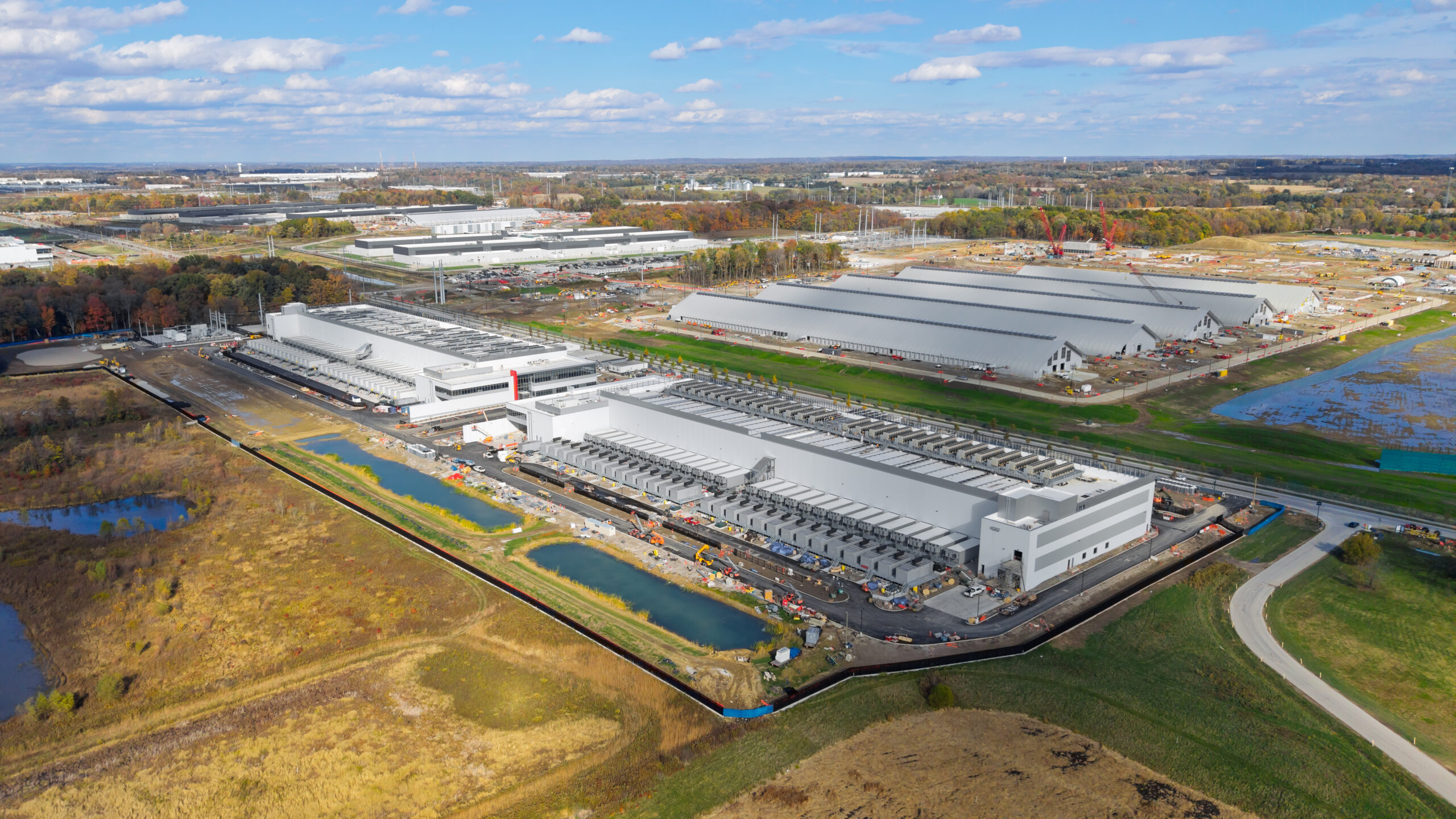
Tight tolerances and rising costs in data center construction underscore the need for reality capture
Data centers built for AI workloads operate under tolerances that would make a hospital project blush. Server halls require precise temperature and humidity control. Power distribution systems are dense, redundant, and unforgiving of installation errors. And the timelines? They’re tight. According to Business Insider, Amazon’s internal “Project Houdini” initiative is pushing to reduce main server room construction from 15 weeks to as few as two or three by shifting assembly into factories and delivering prefabricated modules to the jobsite.
For data centers in the United States, the next layer is the tariff reality. According to metrics published by commercial real estate experts Cushman & Wakefield, as of April 2026, steel tariffs in the US sit at 50 percent, while aluminum prices have climbed 40 percent. Cushman & Wakefield estimates that current tariff rates have pushed construction materials costs up 6 percent relative to the 2024 baseline, with total project costs rising roughly 3 percent from tariffs alone.
That combination – extreme precision requirements, compressed timelines, and elevated material costs – creates a definitive need for robust, top-quality construction reality capture and data analysis services, because every rework event now costs significantly more and stresses an already tight schedule. A missed conduit run in a data center project means paying currently elevated material prices to redo work that should have been caught the first time. Accuracy, communication, and efficiency become more important than ever.
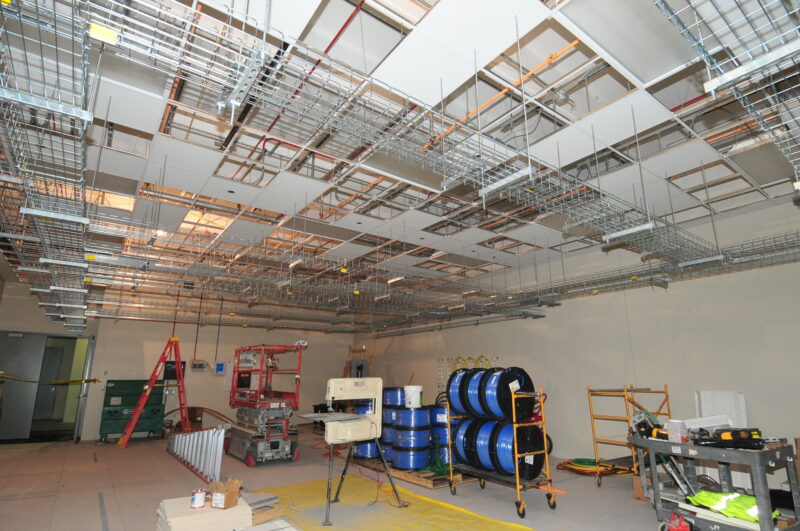
The right services support accurate, on-schedule data center construction
As the global leader in delivering data-driven services that connect physical reality to digital workflows, Hexagon Multivista provides integrated Capture, Create, Analyze services that bridge the gap between what was designed and what was actually built.
Multivista reality capture experts will come on site, work alongside the trades, and capture exact jobsite conditions with Leica 3D laser scanners with up to 1/8-inch (3mm) accuracy. That as-built point cloud data empowers digital analysis services such as deviation analysis and progress reporting. For data center projects specifically, this data and the analysis services of Hexagon Multivista can find and fix errors before they become rework, as well as assist with capacity planning, uptime assurance, and change management.
Mark King, Hexagon Multivista’s Senior Product Manager, puts it this way: “The complexity of systems and services means space is at a premium; any small deviation from plan can have a huge impact.”
The proof is in the field. In Virginia, HITT Contracting validated 1,148 prefabricated elements on a 360,000 sq.ft. data center using Hexagon Multivista deviation analysis. DPR Construction automated scan vs. model comparison to deliver accurate as-built BIM faster. While not a data center, the benefits of solid reality capture shone clearly in New York, where the Collegiate School saved $1.7 million in destructive discovery costs using Multivista photo documentation.
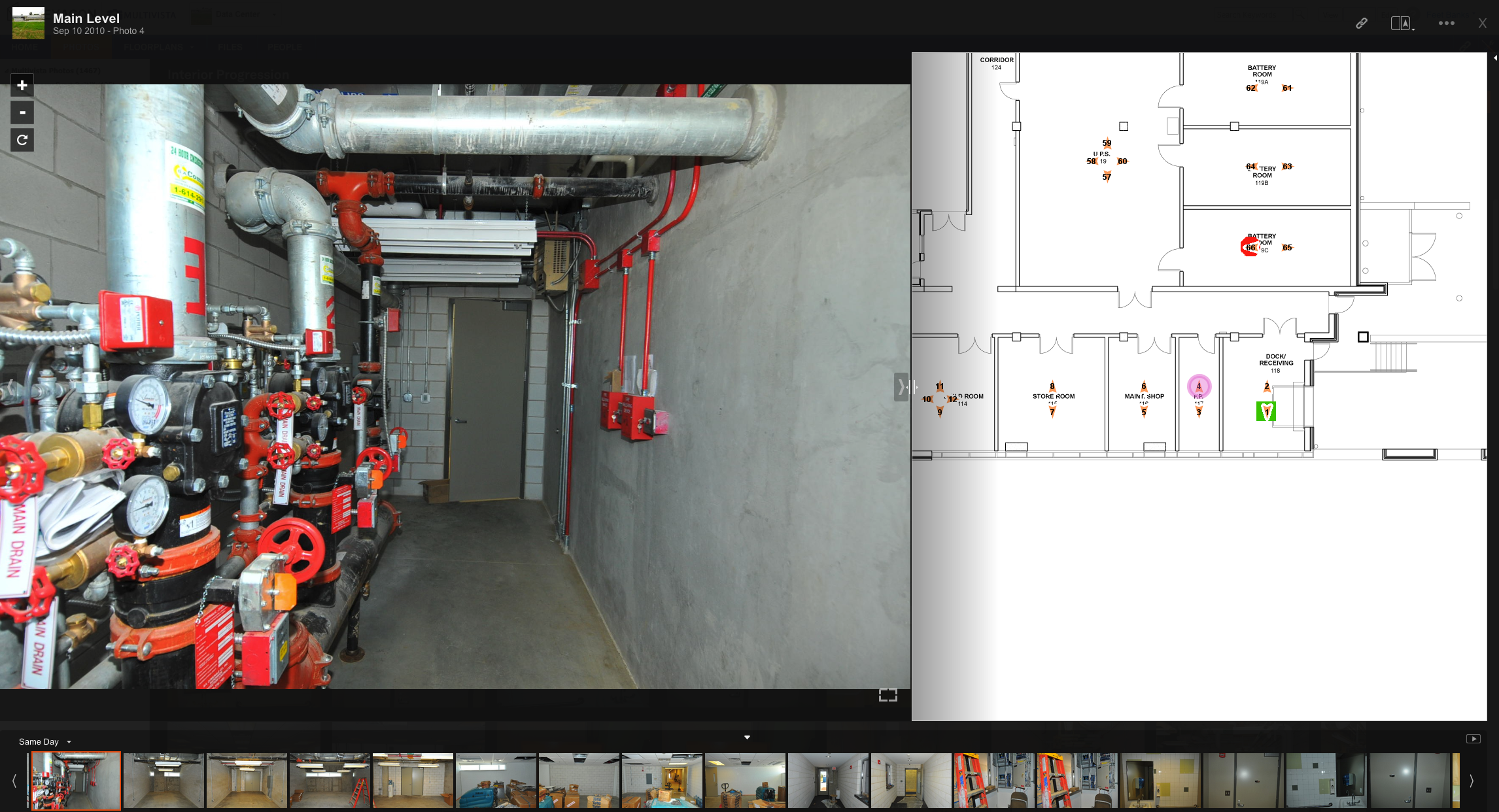
Early deviation detection service catches mistakes before rework costs skyrocket
For general contractors on a data center (or any) project, high-resolution photos and 360-degree imagery are indexed by date and location tied to digital floor plans. Aligning as-built data from 3D laser scans with as-designed building information models (BIM) creates the opportunity for early deviation detection and the ability to reduce conflicts for MEP subcontractors. For owners, an accurate, updated as-built model at project completion proves invaluable for future maintenance, repair, or expansion efforts.
The Dodge Momentum Index points to stronger construction activity in late 2026, driven by data centers and healthcare. ENR’s sold-out FutureTech 2026 show focused heavily on AI integration and technologies that reduce errors. The industry knows where it’s headed, and Hexagon Multivista is already there.
For teams entering the data center space, the documentation playbook that worked for office towers will not cut it here. Capture, Create, Analyze services provide the digital thread data center clients demand, and construction teams would be foolish to build without it.
Professional reality capture and other data-driven solutions are essential for data center construction, but they can be equally useful on any project. Reach out to learn more about putting Capture, Create, Analyze services to work on your next project.