

Net-zero targets require objective evidence of exactly what’s been built, and how well.
For the construction industry, it’s no longer enough to build well; you also need to build responsibly. In fact, according to Forbes magazine, buildings account for nearly 40 percent of U.S. energy consumption, and regulatory bodies around the globe are starting to hold the construction industry to higher accountability and environmental impact standards.
Net-zero standards are tightening, ESG scrutiny is increasing, and, to get necessary certifications, more construction professionals are being asked to prove their “green” systems and materials are correctly installed, especially when inspectors arrive after the drywall is already up and key work has been covered up. Top AECO companies are using reality capture, mostly photography or 3D laser scanning, to memorialize their projects as they come together and create a record of important factors like air barrier integrity at every penetration, mechanical specs matching actual installation, and the quality of materials used.
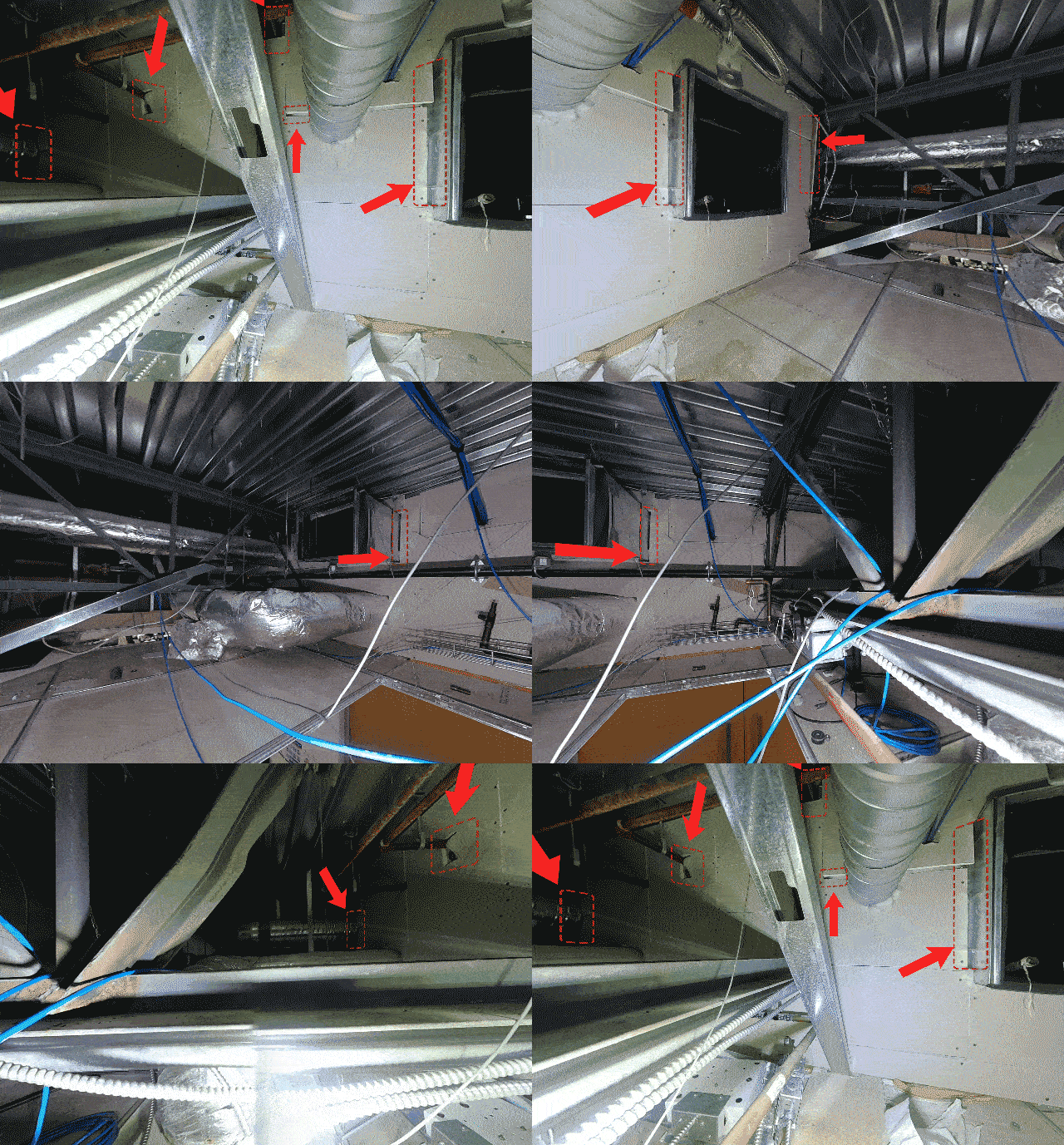
Automated firestopping analysis helps flag improperly sealed wall penetrations so they can be attended to prior to inspection.
At the same time, there is also concern about the veracity of construction images. A study published by the analytics and insurance experts at Verisk found that 36% of consumers admit they’d consider altering a claim image or document. The rise of AI image manipulation tech appears only to be adding fuel to the fire as image and report manipulation becomes more common.
“AI editing tools are changing how people interact with digital content, and insurance is feeling that shift in real time,” says Shane Riedman, president of Antifraud Analytics at Verisk. “Our concern is that many consumers don’t see small edits as crossing a line, but when those changes make their way into claims, they can materially affect outcomes.”
Construction reality capture for third-party proof of work
Certainly, there is a difference between professional construction industry experts and the public consumer, but the trends are still concerning. In a proactive response to photo-fraud concerns, many construction firms are turning to third-party reality capture to provide the time-stamped, objective evidence of work completed properly. The 2025 Sustainable Construction Barometer surveyed more than 4,000 industry professionals across 27 countries, and 69% counted sustainable construction as a priority.
Beyond new builds, renovation and retrofit projects also show immense potential for reduced environmental impact and energy efficiency. With any project, third-party evidence of work done properly can expedite inspection times, significantly reduce post-construction dispute times, and help project teams build better, more efficiently, and more sustainably on site.
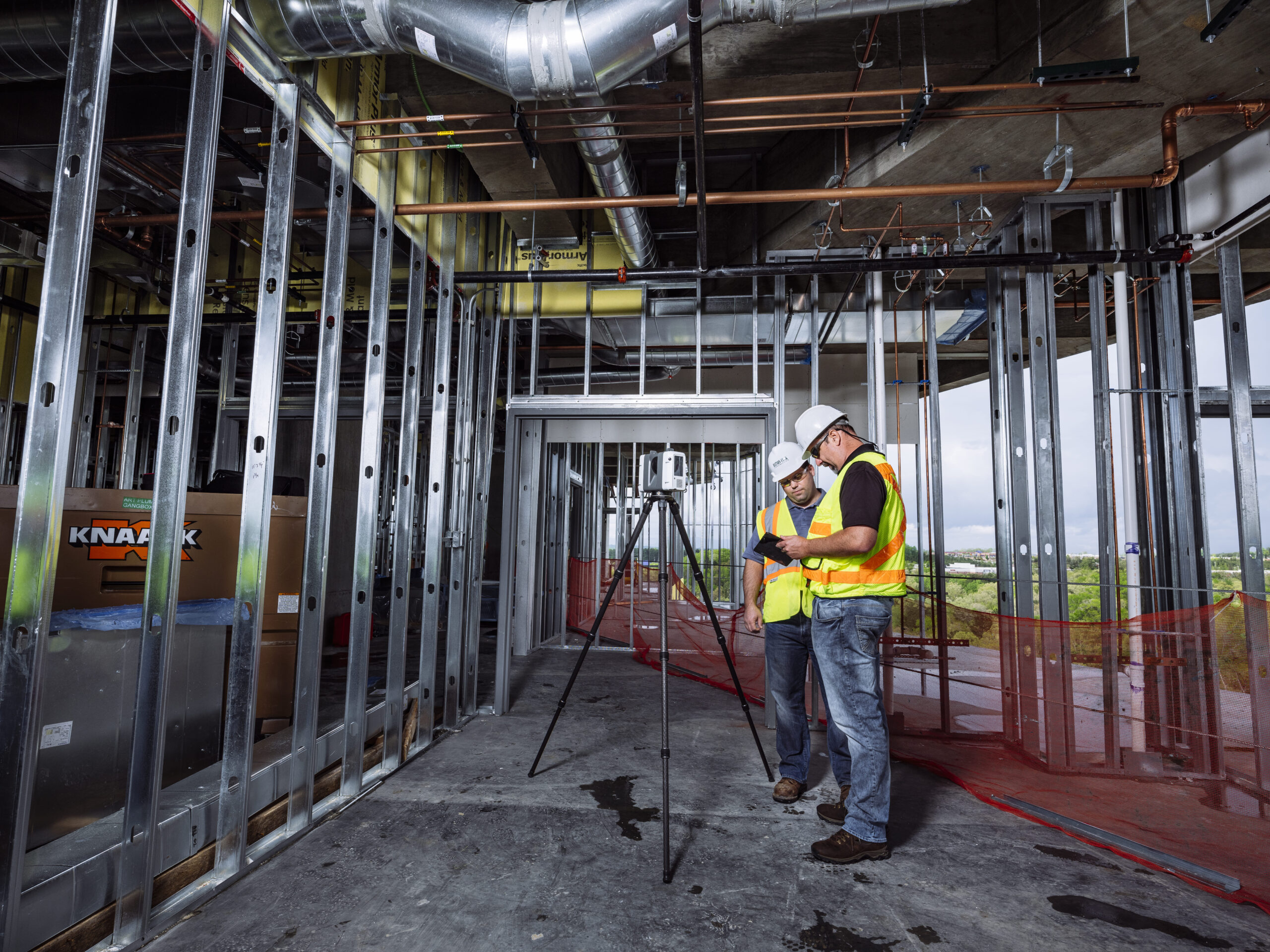
Multivista’s photo and video documentation or 3D laser scanning services provide location-specific evidence of green installations that are captured before concealment. This sort of external, progressive reality capture creates a chronological compliance record far more convincing than inspection reports.
 Reality capture to reduce rework and wasted materials
Good third-party reality capture is great for proving what’s been built, but there are other major “green” benefits to be had. One of the worst offenders affecting the environmental impact (and profitability) of construction projects is rework, the process of redoing work incorrectly completed the first time.
In most cases, heavy rework goes hand in hand with destructive discovery; teams often must tear down walls/ceilings or break up asphalt to find the issues they need to fix. This leads to excessive job site waste and increased impact. Some estimates claim construction/destruction debris makes up as much as one quarter of all waste produced in the United States in any given year.
Key causes of rework in construction include:
- Poor communication and lack of transparency
- Incomplete scope definition and front-end planning
- Lack of coordination between teams
- Insufficient quality assurance (QA)
- Poorly defined work processes
- Material or equipment defects
- Change orders
The same visual reality capture that helps prove a project was built to scope and standards can also be used to find problems or issues after they’ve been covered up. Prioritizing consistent, quality jobsite reality capture services during construction or renovation helps alleviate all the above issues and reduce destructive discovery, especially when it’s combined with automated deviation analysis services from Hexagon Multivista.
How does deviation analysis work?
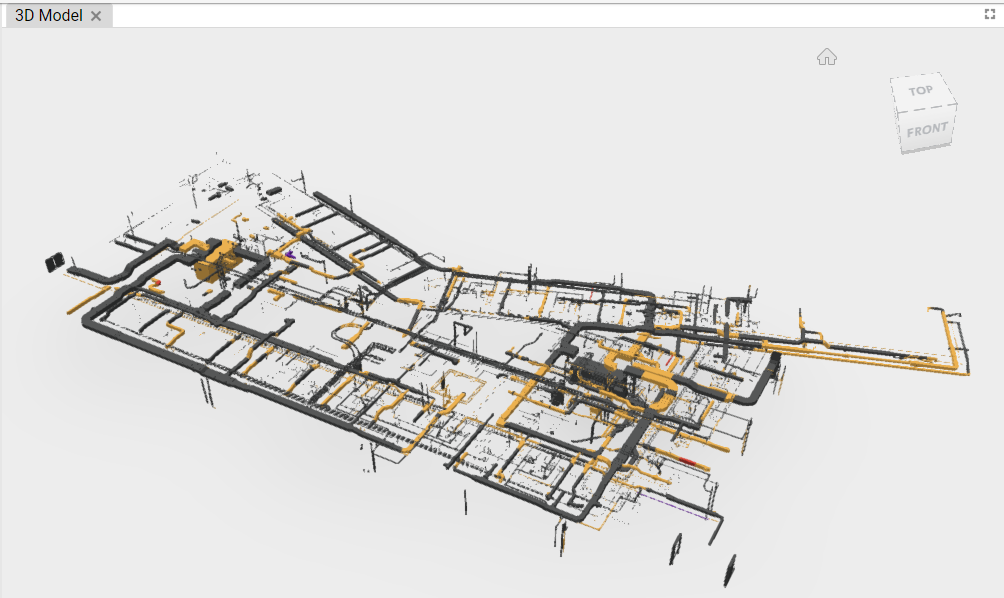
Multivista reality capture specialists come onto your project site and capture as-built conditions with top-quality Leica 3D scanners. By comparing that as-built scan data against 3D design intent models, the deviation analysis service identifies installation deviations by trade and floor, tracks quality trends, and proactively prevents downstream system clashes that could result in costly rework and schedule delays.
Catching deviations early allows teams to locate and fix them before they’re covered up, which greatly reduces waste of materials and time.
Reality capture: Future compliance proof and real-time waste reduction
With floorplan-searchable photographic proof of exactly what materials were installed, and when. Projects that hire professional reality capture services protect themselves in the event of future compliance or insurance disputes. These stakeholders also create a historical record of the build to remedy future issues more efficiently.
When integrated with 3D-laser scanning and deviation analysis services, project teams can reduce waste as they build. Video documentation adds commissioning evidence: high-definition, chapterized videos accessible by QR code demonstrating that systems were installed properly and operating as designed.
The buildings we construct in 2026 will be measured against carbon and environmental targets for decades. The visual documentation captured during construction makes those measurements credible.
Multivista has been visually documenting jobsites around the world for more than two decades. To learn how we can help your current or next project meet its goals, reach out for a demo.