

It’s no secret that construction projects are constantly racing against the clock.
Project managers chase updates. Superintendents answer questions. Engineers verify installations. Owners want visibility. Facilities teams need as-built documentation. And everyone spends valuable sections of their workday searching for information that should be easy to find.
For over two decades, the construction industry has been using new technologies to help reduce risk, improve quality, and avoid disputes. And linking as-built photography, laser scans, and data to digital project floorplans is helping project teams with that. But one of the most immediate advantages of these construction reality capture services is much simpler: It gives your team time back.
The hidden cost of looking for answers
The hidden cost of looking for answers
Both during and after construction, so many important project decisions depend on knowing what happened, where it happened, and when it happened. For example:
- Was that conduit installed before the wall was closed?
- What did the mechanical room look like three months ago?
- Is the fire suppression system finished and tested? Or still underway?
- Which areas were completed before the latest schedule update?
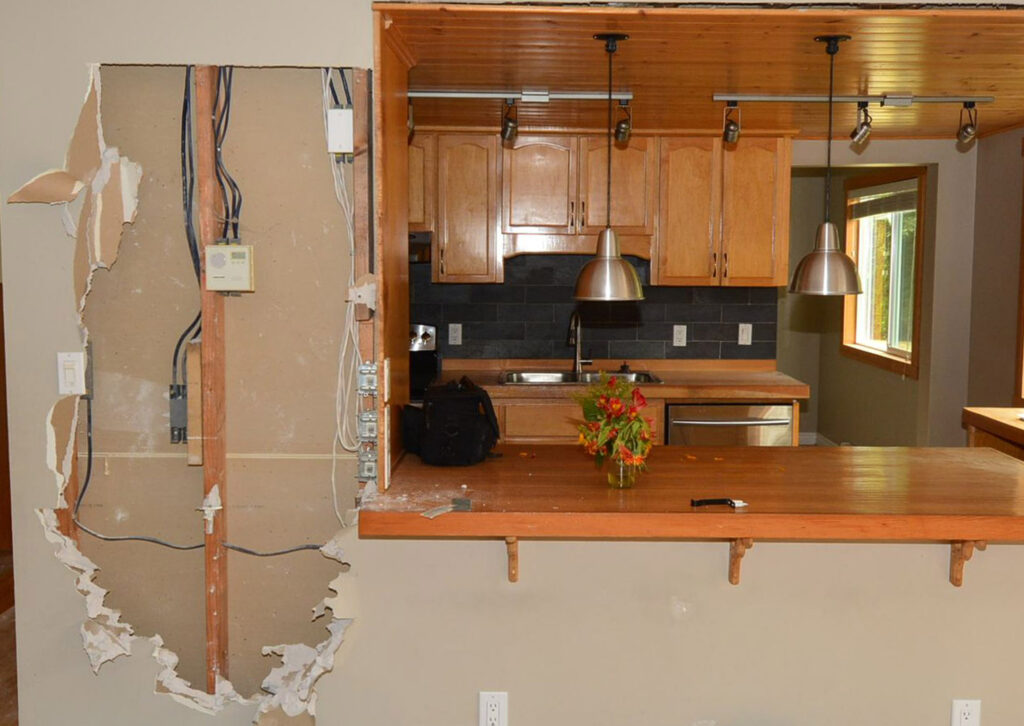
Without a structured visual record, answering these questions often means digging through photo folders, making phone calls, revisiting the site, tearing open walls, or relying on someone’s memory.
None of those activities move the project forward, but they all take time.
Project information is only useful if you can find it
As-built photosAs-built photos (or 3D laser scans) of a construction site will save your team time. But there are two main challenges:
- Capturing the images/data – someone must walk the site and get the photos, which can take a fair chunk of time.
- Organizing the images/data – teams need to be able to find what they are looking for quickly and share the information with others.
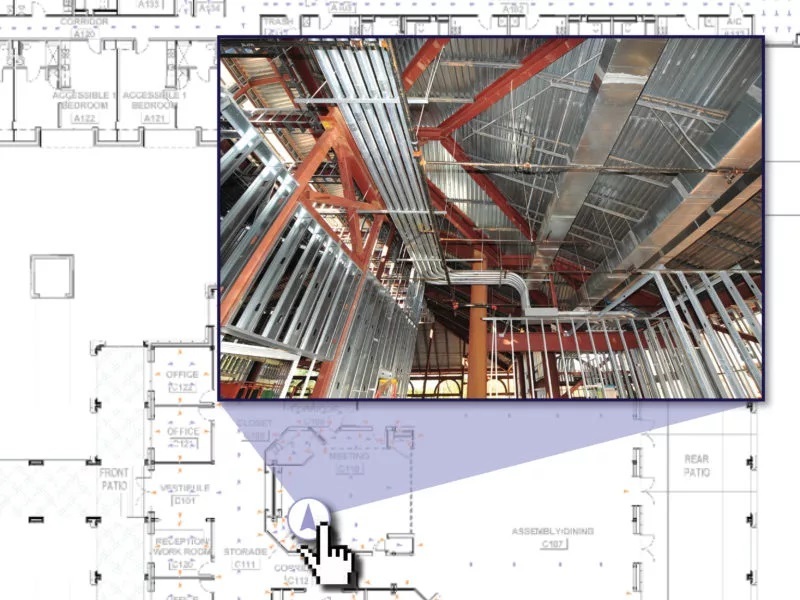
Multivista has been solving both problems since 2003. Trained specialists work alongside project teams to capture the right information (photos/scans/training videos/etc.) at the right time, and everything is uploaded and organized on a cloud-based digital floorplan to create a searchable visual record of exactly what was built and where. This allows teams to find the exact information they need by location and/or date rather than searching through file folders or thumb drives full of files.
Now, there’s no need to ask, “Has anyone seen photos of the ceiling above Conference Room 214?” Instead, teams can navigate directly to the area on a floor plan and review documentation captured at that exact location, or anywhere else throughout the jobsite. Minutes saved here and there quickly become hours over the life of a project.
Fewer site visits. Faster decisions
Even the best person on your team cannot be everywhere at once, but shareable digital visual records can.
Construction reality capture allows stakeholders to remotely review project conditions, monitor progress, and validate installations without having to physically travel to the site. And when owners, consultants, trade partners, and project teams can all quickly access the same visual records at the same time, questions can often be answered in minutes rather than days.
The result is faster decision-making and less time spent coordinating site walks for issues that could be resolved by looking at a few photos or taking measurements from a scan.
Reduce rework and repeated investigations
One of the biggest drains on project time occurs when teams need to investigate an issue after work has already been covered up.
Mechanical, electrical, plumbing, and other building systems can disappear behind walls, ceilings, and finishes. When questions surface later, finding answers can involve destructive discovery, which costs money, wastes materials, and takes up valuable time.
Regularly captured as-built photos or data provide a visual history of the project. When a project has been photographed on a bi-weekly schedule, teams can quickly go back in time to see what’s behind the walls, ceilings, and floors to validate as-built conditions, investigate issues, and understand exactly what exists behind finished surfaces.
The faster a team can verify conditions, the faster they can move on to solving the problem. The more specifically they can locate it, the less destruction required to remediate it. Photos and data tied to floor plans make this process faster and more precise.
Better progress visibility without additional administrative work
Project reporting can be surprisingly time-consuming. Gathering updates from multiple stakeholders, collecting photos, assembling reports, and answering follow-up questions all add administrative burden to already busy teams.
Regularly performed reality capture photos or scans create an ongoing visual record that helps teams demonstrate progress with confidence. With a professional documentation service on site memorializing as-built conditions at regular intervals, project teams get continuous visibility throughout construction without allocating the task to other team members. Instead of spending time proving progress, teams can focus on achieving it.
A resource that keeps paying back time
The value of professionally captured as-built photos and data doesn’t end when construction is complete.
Months or years after turnover, owners and facilities teams frequently need answers about system locations or the ability to see behind walls, ceilings, and floors for renovations, maintenance activities, or warranty issues.
A well-organized visual record provides future teams with access to information that would otherwise require destructive investigation or extensive research. In other words, the time (and money) savings continue long after the project has been delivered.
Buy back time, improve outcomes
Construction technology is often evaluated based on return on investment or “ROI.” Still, decades of partnerships in over 80 markets around the globe have demonstrated that Multivista’s services save clients much more than they cost.
Perhaps a more important metric is the cost of inaction – how much time is your team spending searching for information that should already be available? How much time and money are you willing to spend down the road to fix problems that information would have helped nip in the bud?
Construction reality capture isn’t just about photos, scans, or other visual documentation. It’s about making project information easy to access when people need it most, so they can use it to solve problems faster and more efficiently.
When teams spend less time searching, traveling, investigating, and recreating past processes for information, they gain more time to focus on quality, coordination, and project delivery.
And in construction, time may be the most valuable resource of all. Reach out to us for a personal demo on how Multivista can solve the exact problems you are faced with and save you time you didn’t even know you were losing.