

For decades, a large segment of the construction industry has closed out each project the same way. Once the building was complete, most teams simply assembled as-built drawings, O&M manuals, warranties, and closeout documents into a turnover package and handed it over to the owner.
Project complete. But today, that isn’t so much the case.
Now, building owners, facilities managers, and asset operators view project documentation through a different lens. Rather than asking, “What documents do we need for closeout?” they’re increasingly asking, “How will this information help us operate, maintain, and improve this building over the next 30 years?”
That shift represents a fundamental change in how the industry thinks about project data, and what data brings the most value to a building’s entire lifecycle. With the rise of visual reality capture – photos, 3D laser scans, video assets, and more – construction documentation is evolving from a project deliverable into a long-term business asset.

The problem with traditional turnover packages
The traditional turnover process wasn’t designed for today’s operational demands.
A facilities manager troubleshooting a mechanical issue five years after occupancy doesn’t want to spend hours searching through file folders, drawing archives, or disconnected PDFs. They need immediate access to accurate information about the building’s systems, infrastructure, and construction history.
Historically, that’s often easier said than done. Over time, project knowledge becomes fragmented. Team members move on. Contractors change. Drawings become outdated after renovations. Critical details about what was installed behind walls and above ceilings become increasingly difficult to locate.
The result has long been a familiar challenge for owners: Information exists, but finding and using it becomes costly and time-consuming. And that cost compounds over the life of the asset.
Buildings last for decades. Project teams do not.
One of the construction industry’s biggest knowledge gaps occurs immediately after project completion. The design and construction teams who possess the deepest understanding of the building eventually transition away and onto the next project. Yet the building itself may remain in operation for 30, 50, or even 100 years.
Facilities personnel, future renovation teams, and ownership groups are often left trying to answer questions that nobody anticipated during turnover:
- What exactly is located behind this wall?
- Where does this piping system run?
- Has this area been modified before?
- What equipment was installed during the original construction project?
- Is there documentation available before exploratory demolition begins?
Without reliable records, teams may be forced to perform site investigations, expose hidden systems, or rely on assumptions that can lead to costly surprises. And in many cases, the issue isn’t a lack of information. It’s a lack of accessible information.
The rise of the living building record
Over the past decade, forward-thinking owners have begun to embrace a different concept: A living building record.
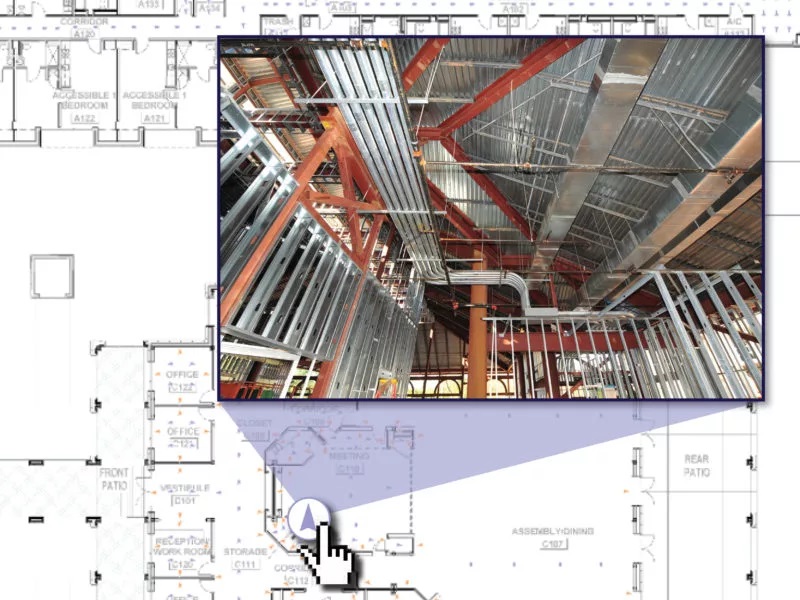
Instead of relying solely on static closeout packages, a living building record creates a continually accessible source of truth that captures a facility’s history, evolution, and physical conditions over time, including:
- Site and construction progress photography
- 360-degree walkthroughs
- Laser scan point cloud data
- Scan-to-BIM models
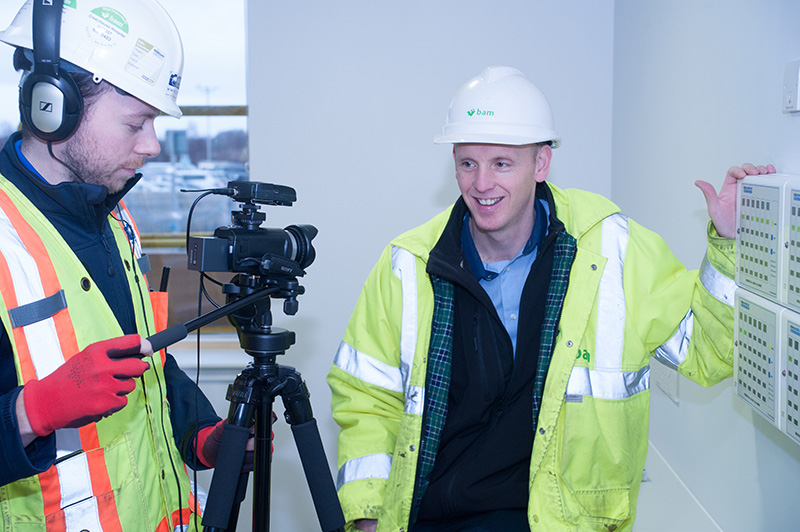
- Owner training videos outlining important systems
- Renovation and repair records
The goal is not simply storing project files – it’s preserving institutional knowledge. When information is organized, searchable, and connected to actual building conditions, facility teams can make faster and more informed decisions throughout the asset lifecycle.
Why operations teams are driving the change
For years, visual reality capture was viewed primarily as a risk-management tool during project construction. It was a way to catch errors early, drive constructive collaboration between teams and trades, and create transparency and accountability if issues arose later.
Today, facilities teams are discovering the operational value of visual documentation long after construction ends. Consider a simple maintenance scenario:
A technician needs to locate a concealed shutoff valve serving a critical building system. Without documentation, the search may involve reviewing drawings, opening ceiling spaces, or dispatching multiple personnel to investigate.
With an accessible visual record of construction conditions such as bi-weekly progression photography or a 3D laser scan of mechanical, electrical, and plumbing installations before cover-up, facilities teams can identify system locations before taking a single physical action. Every time a team avoids unnecessary exploratory work, they save both time and operational resources.
Digital twins start with reliable documentation
Digital twins have become one of the construction and asset management industry’s most discussed topics. Whether teams are working off data-enriched 2D floorplans or 3D building information models (BIM), one reality remains constant: A digital twin is only as valuable as the information that supports it. Owners need accurate information about the physical asset itself.
That foundation comes from high-quality documentation and reality capture. Without reliable records of existing conditions, even the most sophisticated digital twin initiative can struggle with incomplete or inaccurate data. This is why many organizations are rethinking as-built reality capture not as a project expense but as foundational infrastructure for future building intelligence.
Measuring documentation by lifecycle value
Rather than looking at reality capture as a budget line item during construction, smart facility owners are asking: How much does poor documentation cost over the life of a building?
When viewed through a lifecycle lens, thorough and accessible reality capture data will influence:
- Maintenance efficiency
- Renovation planning
- Asset management
- Risk mitigation
- Warranty administration
- Operational continuity
A photo, scan, or documented condition captured during construction may deliver value ten years later when a renovation team needs answers that would otherwise require opening walls or conducting additional surveys.
A new standard for project closeout
As owner expectations continue to evolve, project closeout itself is changing. Owners no longer want a bundle of paperwork. They are looking for a gateway to usable building knowledge for the future – visual proof of work done, videos of trained technicians outlining maintenance, repair and operations protocol for key systems, the ability to add new information, images and data to an easy-to-access digital hub anyone on their team can use.
Owners recognize that buildings are long-term assets and expect their jobsite data to be delivered with the same mindset to better assist operational efficiency, lifecycle value, and a lasting source of institutional knowledge that supports their assets long after the ribbon-cutting ceremony.
Ready to ensure your building is future-ready?
Explore how Multivista’s reality capture services can add value to your building or facility for its entire lifecycle and beyond. Reach out for a personal demo.