The construction industry is at a point where teams accept rework as an unavoidable part of project delivery. But in today’s environment of tight schedules, labor shortages, rising material costs, and shrinking margins, that mindset is changing.
Instead of asking how to manage rework when it happens, leading contractors are focusing on a different question:
How can we prevent it from happening at all?
It’s an old saying: an ounce of prevention is worth a pound of cure. According to industry research for Navigant, rework typically accounts for 5% – 10% of total project costs, while information failures contribute to nearly half of all rework events. Studies have also linked rework to schedule increases of up to 10% on some projects, making prevention one of the most effective ways to protect budgets and timelines.
The best (and cheapest) kind of rework is the rework that never occurs.
Construction visibility is becoming a competitive advantage
Many construction mistakes aren’t caused by a lack of expertise, but rather by a lack of visibility.
Teams often make decisions based on incomplete information, outdated site conditions, or assumptions about work that has already been completed. A misplaced sleeve, missing penetration, or coordination issue can remain hidden until a later phase of construction, when the cost of correction is significantly higher.
This is why owners, contractors, and project managers are increasingly investing in technologies that provide a clearer picture of the jobsite as construction progresses.
Prevention requires better information
The most effective way to prevent rework is to identify problems before they affect downstream trades, and construction photography and reality capture have become a critical tool for modern teams.
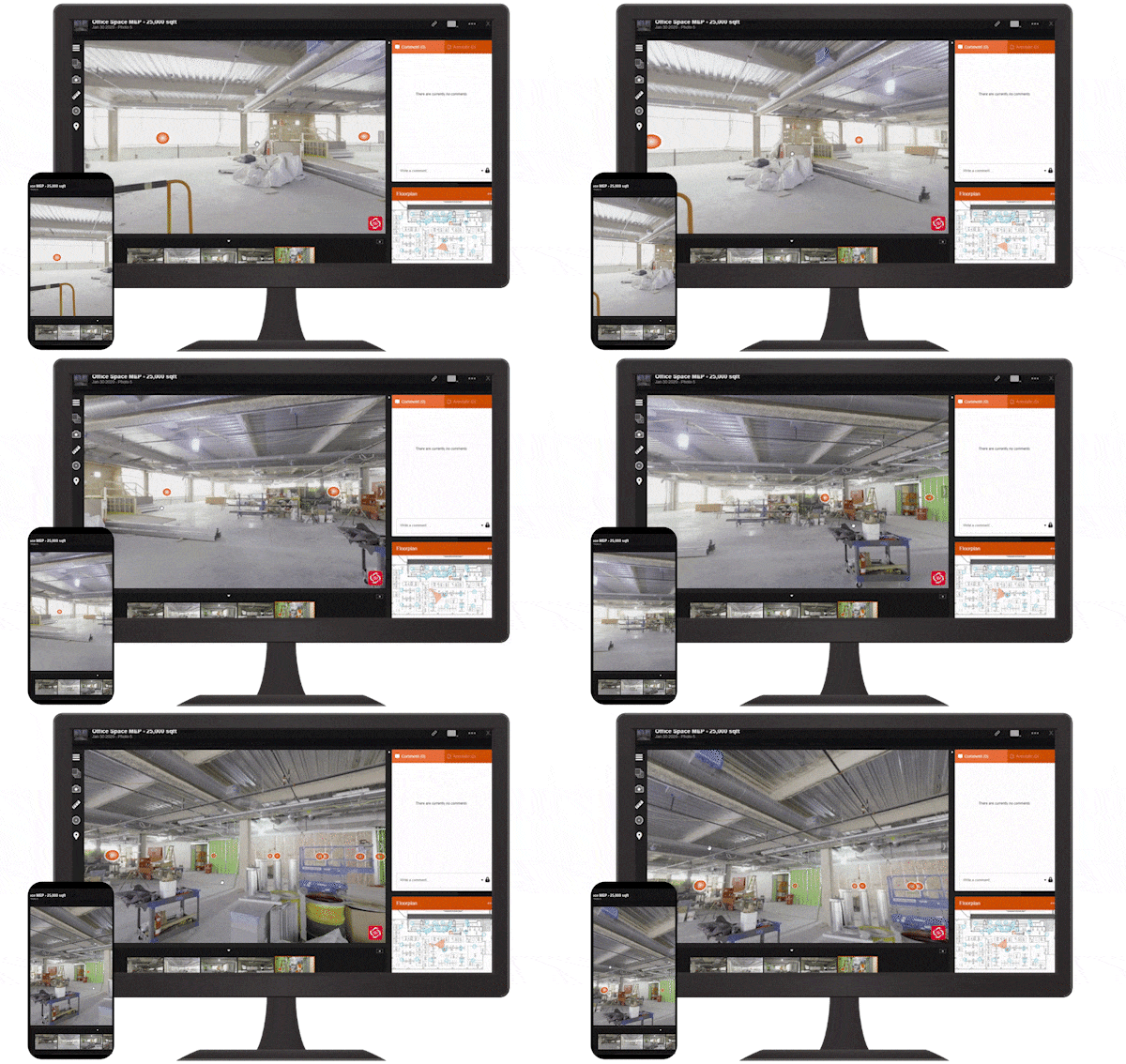
Through services such as photo documentation, 360° progression photography, laser scanning, UAV/drone mapping, and Scan to BIM workflows, Multivista helps teams create a continuously updated record of project conditions and captures important jobsite data before it is covered up.
Rather than relying on memory, emails, or field notes, stakeholders can access a visual record of exactly what existed on-site at a specific point in time. The result is faster decision-making, better accountability, and fewer surprises.
Finding issues before they become expensive
Easily accessible reality capture data and photos helps teams identify issues before they become costly corrections.
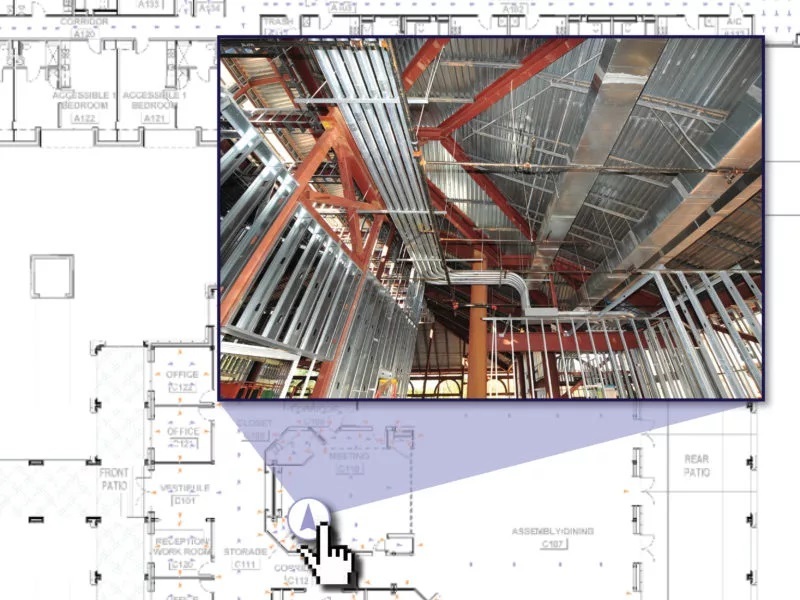
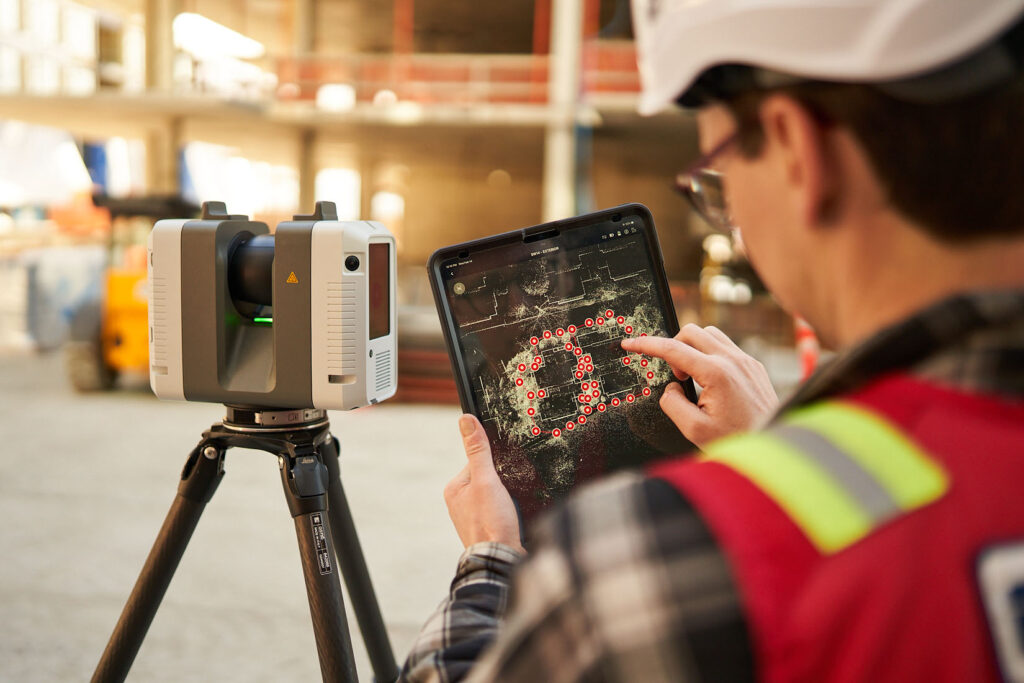
Regular photo documentation provides visibility into concealed mechanical, electrical, and plumbing systems before walls and ceilings are closed. 3D laser scanning creates highly accurate as-built records that can be compared against design intent to identify deviations before they become field conflicts.
The financial impact can be significant. On a state-of-the-art environmental science campus, teams at Swinterton Builders used Multivista photo documentation to verify important rooms had the correct backing installed prior to hanging wall cabinets. Project manager Jeff Stephenson estimates that just that one use case saved his teams over $15,000 and days of rework that would have occurred had they had to tear down the freshly painted walls to prove to the owner the building owner that the backing was installed correctly.
In another instance, they used progression photos to show an inspector that correct rust removal had occurred prior to painting on exposed steel. “I also estimate a savings of about $10,000 in salary time over the life of the project,” Stephenson says. “So just on these three items, our savings total almost $40,000 and that doesn’t take into account the amount of time we saved being able to navigate the site virtually by pinpointing exact locations based on your project mapping.”
The goal isn’t simply to create documentation; it’s to create confidence that teams can catch issues before they have a chance to grow.
Preventing costly exploratory work
Many rework events begin with uncertainty. When teams don’t know exactly what’s behind a wall, inside a slab, or above a ceiling, the default solution is often demolition, exploratory work, or expensive testing.
Reality capture gives teams another option.
Recalling a 58-story tower project in Austin Texas, Tim Fitzgerald – Superintendent of Quality Control for Balfour Beatty – highlighted just how expensive troubleshooting can become without reliable documentation.
“When you have 370 units, and at least two or three holes being cut in every unit as a confirmation or troubleshooting exercise, it turns into almost 1,000 patches,” Fitzgerald says. “At $200 a patch, that’s $200,000.”
Similarly, Matthew Wolters, Project Manager at Ark Residential Corp in Florida, used Multivista documentation to troubleshoot electrical issues, locate a plumbing leak, and identify the exact location of a pipe, reducing the amount of drywall that needed to be removed and repaired. “The photos definitely helped us throughout the project,” Wolters says.
These aren’t isolated examples. They’re everyday situations where having accurate construction records prevents unnecessary work, delays, and disruption.
A single source of truth for the project team
Preventing rework often comes down to ensuring everyone is working from the same information.
When architects, contractors, owners, facilities teams, and subcontractors can quickly access the same updated site documentation, coordination becomes easier and costly misunderstandings become less common.
Questions that once required site visits, exploratory demolition, or lengthy email chains can often be answered in minutes.
“We use Multivista to document all of our in-wall MEP systems prior to drywall closure,’ says Sean Carney, Project Manager, Gilbane Building Company. “It serves as a record of everything that’s behind the drywall. In the event there’s an issue, or any question ever comes up, whether it’s related to a design change or troubleshooting, [the Multivista data] allows you to see everything that’s there without doing demolition. At the end of the day, it saves us time and money.”
And preventing problems or destructive discovery doesn’t stop once a building is finished. Aa reliable record of how a project was built also creates long-term value for owners and facilities teams managing the building after handover.
The future of quality control is proactive
Quality has long been paramount in the construction industry. What’s changing is how quality is achieved. Rather than relying solely on inspections after work is complete, more organizations are embracing continuous verification throughout the project lifecycle. Reality capture enables teams to monitor progress, verify installations, and identify issues before they become schedule delays or budget overruns.
And as projects become more complex, preventing issues early is becoming a competitive advantage. The organizations that consistently deliver projects on time and on budget aren’t simply better at fixing problems. They’re better at avoiding them altogether.
By combining comprehensive project documentation with reality capture technologies, Multivista helps construction teams move from a reactive approach to a proactive one – giving stakeholders the visibility they need to prevent mistakes, reduce rework, and keep projects moving forward. Reach out to our team if you’d like a personalized demo of how Multivista reality capture can help prevent issues down the road.