

Every construction project begins with a risk management plan. Teams identify potential threats, assign responsibilities, build contingency plans, and monitor progress against schedules and budgets.
Yet despite all this preparation, projects still encounter disputes, delays, rework, and costly surprises.
The reason is that most construction risks do not originate in the planning process; instead, they emerge in the gap between what stakeholders think is happening on-site and what is actually happening on-site.
These days, a growing number of owners and project teams are closing that gap through reality capture.
The visibility problem
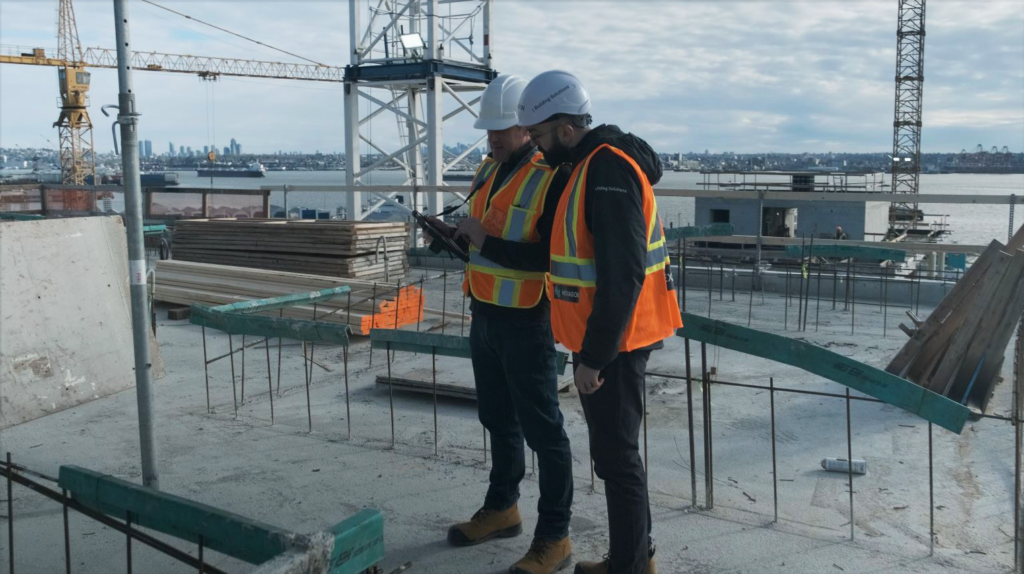
Traditional risk management depends heavily on reports, emails, meeting updates, and site visits. While these tools remain important, they generally only provide a partial picture of project conditions and can quickly become outdated as the build progresses.
Construction sites change every day. Work becomes concealed behind walls and ceilings, and installations occur across multiple trades simultaneously. By the time an issue is discovered in the office, the conditions that caused it may already be hidden from view.
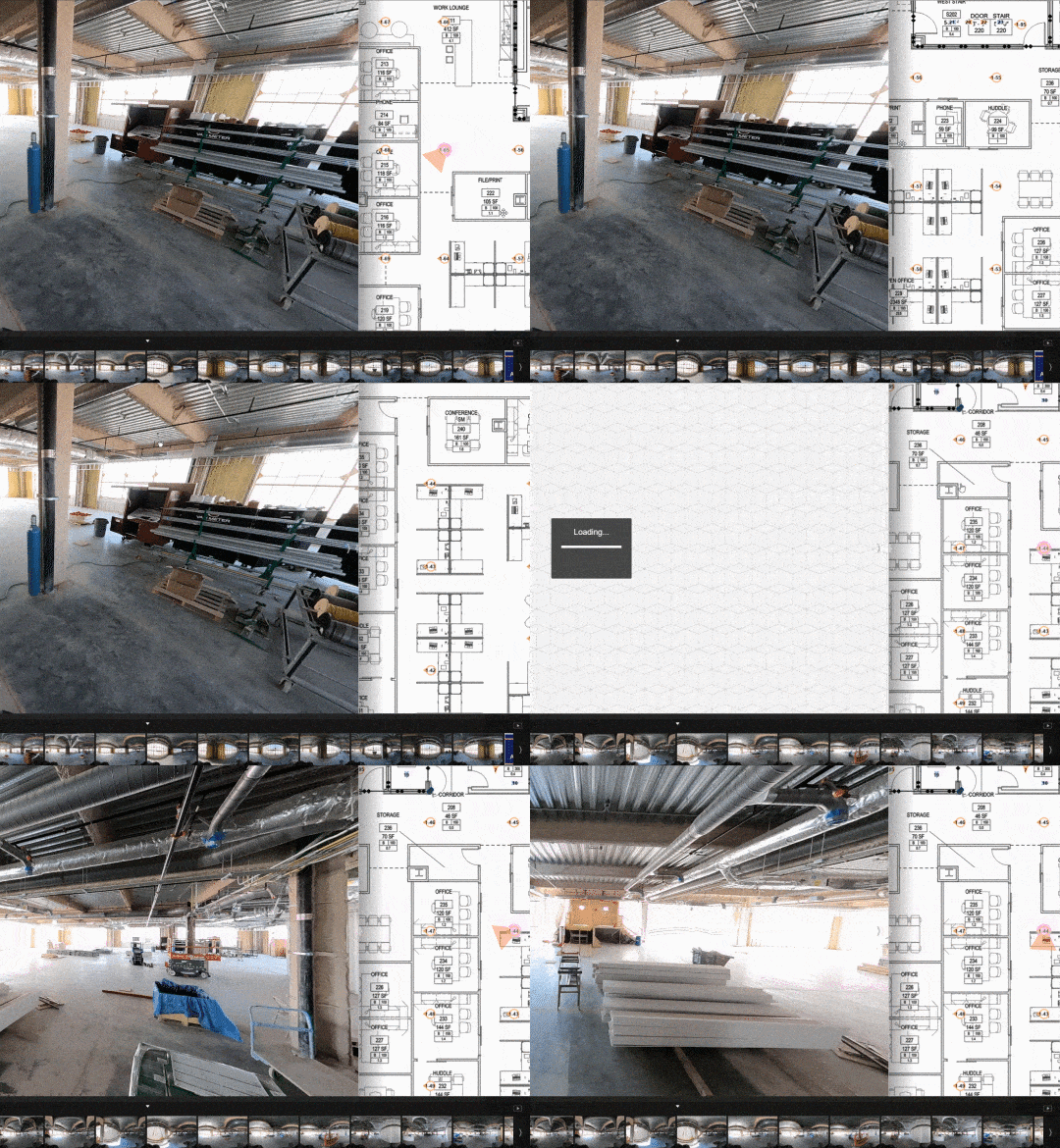
Reality capture addresses this challenge by creating a time-stamped visual record of the project throughout construction. Using technologies such as 360º photography, 3D laser scanning, combined with a floorplan-based interactive viewing platform, teams can review site conditions as they existed at specific times and locations. Industry experts increasingly view this capability as a powerful method for reducing project uncertainty and improving decision-making.
Better documentation, lower risk
Information is power, on a jobsite (and most other places), so it’s not surprising that one of the most common sources of construction risk is incomplete information. Questions such as, “Was that conduit installed according to plan?” or “When was this condition first observed?” can quickly lead to disputes, schedule impacts, and additional costs.
According to industry commentary from Construction Dive magazine, contractors are increasingly using 360-degree reality capture to provide visual evidence of jobsite conditions and project progress, helping teams answer critical questions about what happened, when it happened, and who was responsible.
The value is not simply in collecting more photos. The real advantage comes from creating a consistent, searchable project record that can be referenced weeks, months, or even years later. Recent developments in machine learning and AI mean top reality capture providers can use 360º project photos for automated progress reporting to better help teams align or adjust schedules in real time as project conditions evolve.
For project owners, objective third-party reality capture creates greater confidence that work is being completed as intended and protects against future disputes. For contractors, it helps support decision-making and reduces reliance on memory or fragmented records.
Turning risk management into verification
One way to reduce the risk of construction problems and rework is to shift away from just focusing on predicting potential problems and lean into verifying real ones.
A 2022 review of 96 construction-industry studies found that reality capture technologies support project monitoring, progress tracking, quality assessment, construction verification, flaw detection, and faster decision-making. The researchers also noted that reality capture enables digital documentation of as-built conditions and supports remote project monitoring and collaboration.
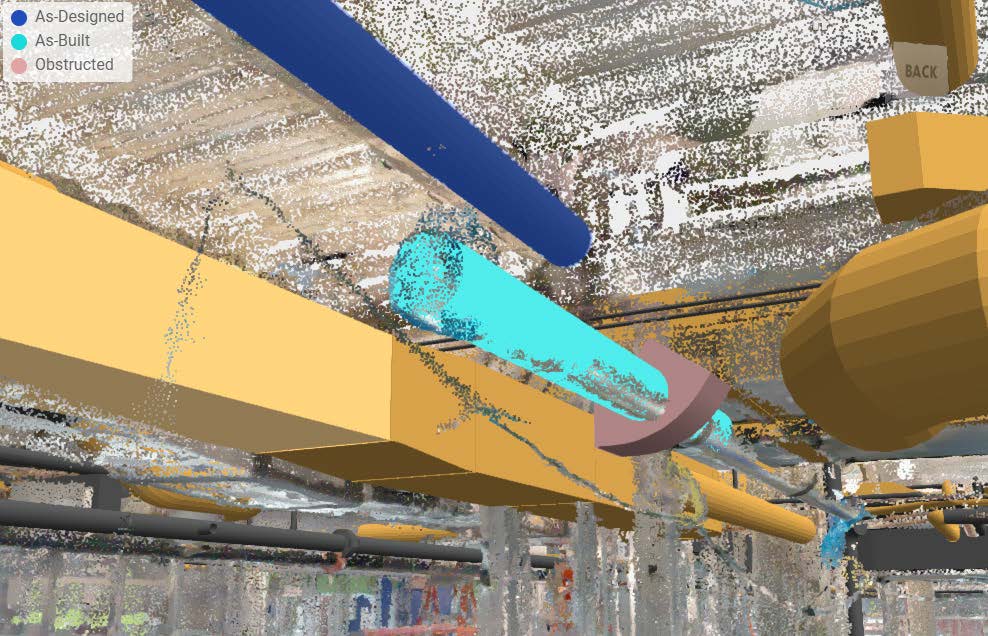
This means project teams can move beyond asking, “What do we think is happening?” and start asking, “What can we verify?” The distinction may seem subtle, but it can have a significant impact on project outcomes. Using any reality capture, but particularly 3D laser scan data and deviation analysis services, verification helps identify issues before they become rework, supports quality-control efforts, and gives stakeholders greater visibility into evolving site conditions.
Aligning a 3D model with up-to-date point cloud data can also produce future clash reports that help predict issues before they occur based on what is actually happening on site. With these early warnings, design or build teams can adjust accordingly to stay on schedule and avoid rework or destructive repairs.
A powerful tool for owners
Owners are increasingly demanding transparency throughout the construction process. They want confidence that the project is progressing according to plan; they want documentation that supports commissioning and turnover, and they want as-built records that remain useful long after construction is complete.
Reality capture helps create that transparency by establishing a visual history of the project from groundbreak to handover. So, when questions arise down the road during operations, maintenance, renovations, or warranty reviews, facility teams have historical site documentation that provides valuable context of exactly what is there. Reality capture data also prevents valuable knowledge loss due to staff turnover or retirement; in buildings meant to remain operational for decades or hundreds of years (education or healthcare facilities in particular), this kind of preserved knowledge remains invaluable.
The future of risk management in construction
Risk registers, spreadsheets, schedules, and reporting tools will always have a place in construction. But increasingly, the industry’s most valuable risk-management asset is not another report. It is access to objective, visual project data.
Reality capture gives project teams a way to see conditions exactly as built, verify progress against expectations, and maintain a reliable record of work throughout the project lifecycle. In an industry where a single missing detail can trigger delays, disputes, or costly rework, that level of visibility is becoming more than a competitive advantage.
It is becoming a necessity.
For organizations looking to reduce uncertainty, improve accountability, and strengthen project outcomes, reality capture is no longer just a documentation tool to help your build teams build. It’s a risk-management strategy for the entire lifecycle of your asset.
But reality capture is only as good as the real-world data going into it. To learn how using an experienced, professional, third-party reality capture team like Multivista gives you an even greater advantage, reach out for a chat or personalized demo.