

In some circles, it’s a buzzword on modern construction projects:reality capture. Sure, it sounds technical, but what does it really mean, and how can it help a project team? The answers are actually straightforward. A lot of the time, reality capture is just photographs of construction projects, but there’s a bit more to it than that.
In the architecture, engineering, construction, and operations (AECO) industry, reality capture is the process of creating an accurate digital record of real-world conditions using technologies such as 360° photography, 3D laser scanning, UAV/drones, webcams, and video.The goal is simple: document what actually exists on a construction project, and make those photos and data available to anyone on the team who needs them so everyone can make better, more informed decisions throughout the construction process and beyond.
Think of reality capture as creating a digital memory for your project. Instead of relying on handwritten notes, scattered photos, or assumptions about what is behind a wall, project teams have a reliable visual record they can access whenever they need it.
Why reality capture matters
Construction projects generate an enormous amount of information. Materials get installed, conditions change daily, and multiple trades work in the same space at the same time.
Without a documented record, teams often face questions such as:
- Was everything installed correctly before the drywall went up?
- Was that pipe routed according to plan?
- What conditions existed before the renovation started?
- Has the project actually progressed as scheduled?
- Where exactly is that valve, conduit, or cable located?
Reality capture helps answer these questions with visual evidence rather than opinions or recollections. High-resolution photos, 360° imagery, and 3D laser scan data create an objective record that can be accessed long after the work is complete.
What does reality capture include?
Reality capture is not a single technology. It is a collection of tools that document the physical world from different perspectives, and with unique benefits.
360° photo documentation
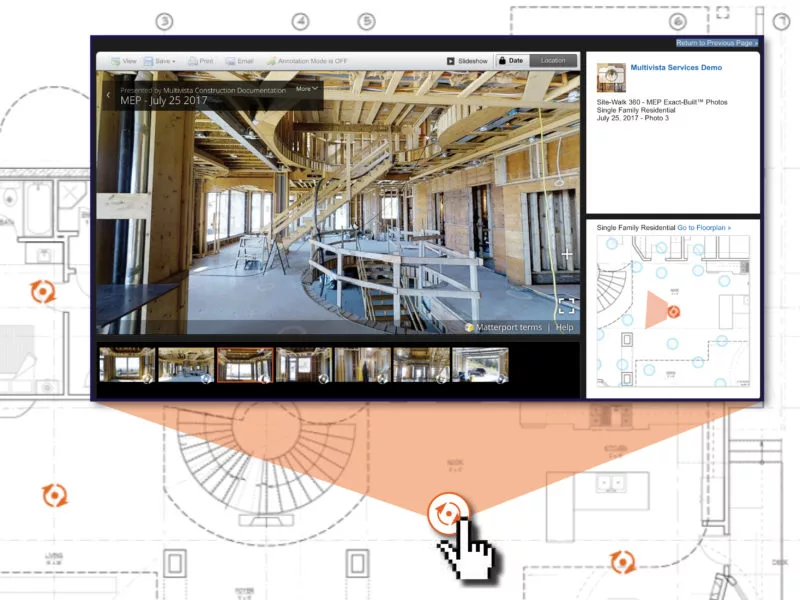
360° photography is one of the most widely used forms of reality capture. Images are captured throughout the project and linked to digital floor plans, allowing users to virtually walk through a site from their computer or tablet/phone.
This provides visibility into construction progress, supports quality assurance efforts, helps resolve disputes, and creates an accessible record of as-built conditions.
High-resolution photo documentation
Traditional high-resolution photography also plays an important role. While 360° imagery provides a broad context, detailed photographs capture specific installation conditions and critical project milestones with exceptional clarity. Teams often document activities such as reinforcing steel before a concrete pour, post-tension cable installation, waterproofing applications, overhead MEP systems before ceiling close-in, or completed equipment installations. These detailed images provide a precise visual record that can support inspections, quality control, future maintenance, and dispute resolution long after the work is concealed.
3D laser scanning
3D laser scanners collect millions of measurements to create highly accurate point clouds organized into precise 3D shapes of existing conditions on a project.
These scans can be used to generate as-built drawings, support renovation planning, create Building Information Models (BIM), verify construction accuracy, and enable workflows like deviation detection and other digital twin initiatives. The result is a level of precision that is difficult to achieve through manual measurement alone.
UAV/drone capture
UAV and drone technology provides a bird’s-eye view of construction projects that can be set to record the exact same angle and perspective. Aerial imagery and orthomosaic maps help teams monitor site progress, verify conditions, improve planning, and track large or complex sites more efficiently.
Webcams
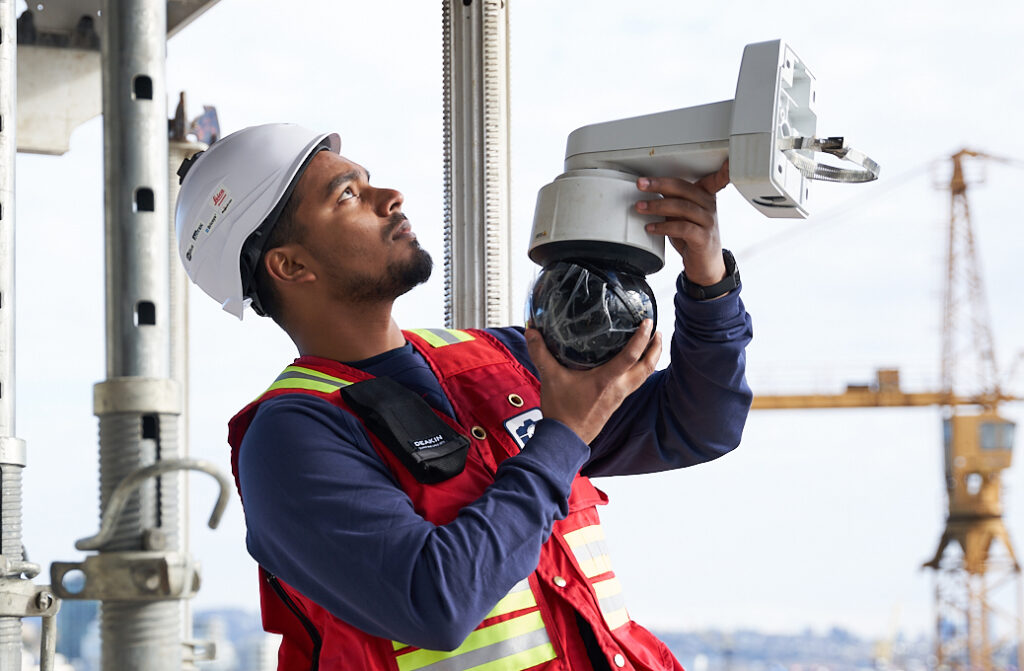
Construction webcams provide ongoing visibility so project teams can monitor progress remotely, maintain a visual record of major milestones, improve stakeholder communication, and even enhance site security.
Systems training videos
Professionally recorded videos of experts walking through maintenance, repair, and operations techniques for important building systems such as HVAC, fire suppression, security, MEP, or technology can greatly benefit future facilities and operations staff by preserving important knowledge that helps ensure a building runs efficiently and cost-effectively.
How reality capture benefits construction projects
Reduced risk
Disputes often arise when teams have different interpretations of what happened on a project. A documented visual record helps establish the facts.
Whether resolving a change order, validating completed work, or reviewing pre-existing conditions, reality capture provides evidence that can reduce uncertainty and support informed decision-making.
Better coordination
Construction teams frequently work from drawings, models, and schedules. Reality capture bridges the gap between what is on those documents and what is actually happening on the project site – plan vs. reality.
When everyone can see what is really happening on site, coordination improves, and misunderstandings decrease.
Improved quality control
Project teams can compare installed work against project requirements and verify conditions before work is covered up or problems become expensive.
Regular documentation helps identify issues earlier, supporting more effective quality assurance and quality control processes.
Faster facility operations
The value of reality capture doesn’t end when construction is complete. Facility managers inherit a detailed visual record of what was built, where building systems are located, and training videos that preserve important facility knowledge for decades. This makes future maintenance, renovations, troubleshooting, and operations more efficient.
Why many project teams choose a third-party reality capture partner
While some contractors attempt to document projects themselves, reality capture is often most effective when performed by an independent specialist such as Multivista. Reality capture requires more than simply taking photos or running a scanner. Consistent capture schedules, standardized workflows, accurate positioning, data management, cloud hosting, and long-term record keeping all play a role in creating documentation that teams can trust.
Multivista provides trained, dedicated reality capture professionals, specialized equipment, and 20+ years of processes designed specifically for construction projects. This allows project teams to stay focused on building while ensuring documentation is captured consistently and objectively throughout the project lifecycle.
In addition, an independent third-party record can carry greater credibility when resolving disputes, supporting quality assurance efforts, or dealing with insurance claims. Multivista’s reality capture specialists also help ensure that photos, 360° imagery, laser scans, drone data, and other deliverables are organized, accessible, and ready to support future activities such as BIM creation, progress analysis, facility operations, and digital twin initiatives.
Combining professional reality capture with self-capture
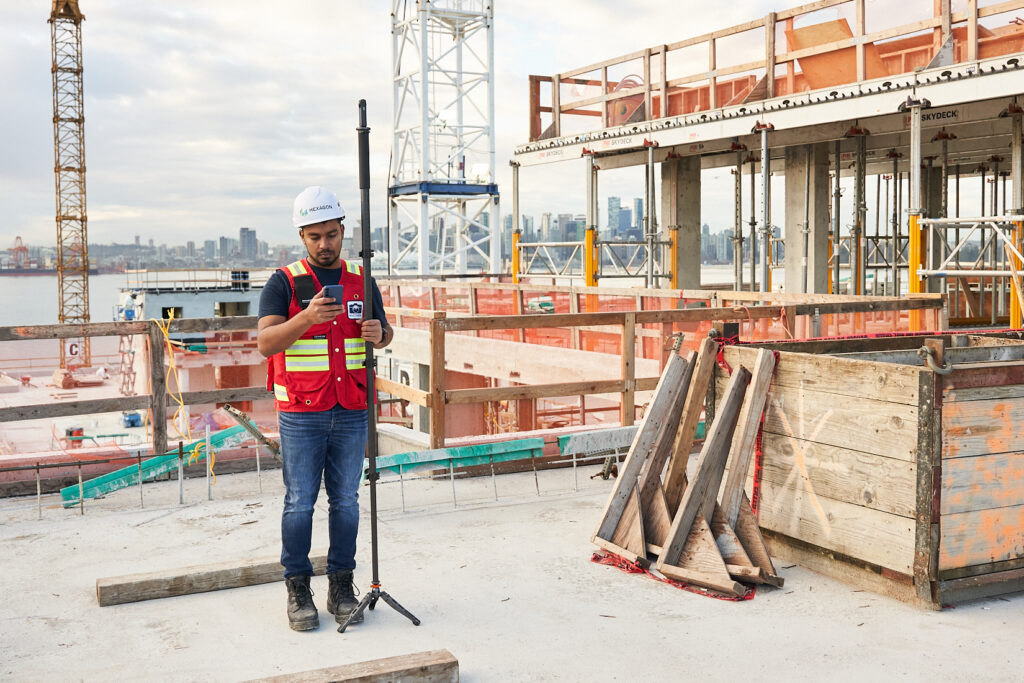
Not every important project event happens on a scheduled documentation day. Installation issues, inspections, punch-list items, safety observations, and unexpected conditions can arise at any time. To ensure their project has total visibility, some teams supplement professionally managed reality capture with self-captured photos and videos collected by field personnel.
Multivista’s self-capture app allows project team members to document conditions as they occur and map those images to project floor plans, creating a more complete visual record of the jobsite. Rather than storing photos on individual phones or in disconnected folders, self-captured images become part of the project’s centralized documentation environment alongside Multivista’s professionally captured data and images, so teams have complete project visibility in one place.
The result is the best of both worlds: professionally captured documentation provides consistency, quality, and an objective project record, while self-capture provides flexibility for documenting time-sensitive events and day-to-day field activities. When combined in a single platform, teams gain a richer understanding of project conditions, improved collaboration across stakeholders, and a more complete record for quality assurance, dispute resolution, facility operations, and future renovations.
Reality capture is more than photos
While visual documentation is the foundation, reality capture is increasingly being used to drive deeper insights.
For example, captured scan data can be converted into as-built drawings. At the same time, automated analysis tools can track construction progress and identify deviations between the design model and field conditions. This allows teams to move beyond simply collecting information and start using that information to improve project outcomes.
Reality capture is the process of digitally documenting the real world so that project teams can see, understand, and verify existing conditions throughout the project lifecycle.
In the AECO industry, that means using tools such as 360° photography, 3D laser scanning, UAV/drones, video, and webcams to create a trusted visual record of construction activity. When anyone on the project team can navigate a floor plan and find images and data of exactly what’s been built, and when, the result is better visibility, improved coordination and collaboration, reduced risk, stronger quality control, and more informed decisions – from design and construction through operations and maintenance.
Simply put, reality capture helps construction teams replace guesswork with facts. And in an industry where a single mistake can cost thousands – or even millions – having access to the truth of what was built can be one of the most valuable project assets of all.
To learn more about exactly what reality capture services will best suit your current or next project, reach out for a personalized demo.